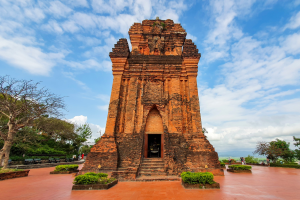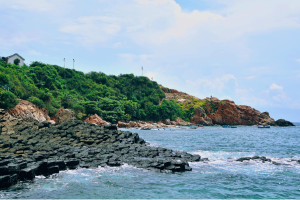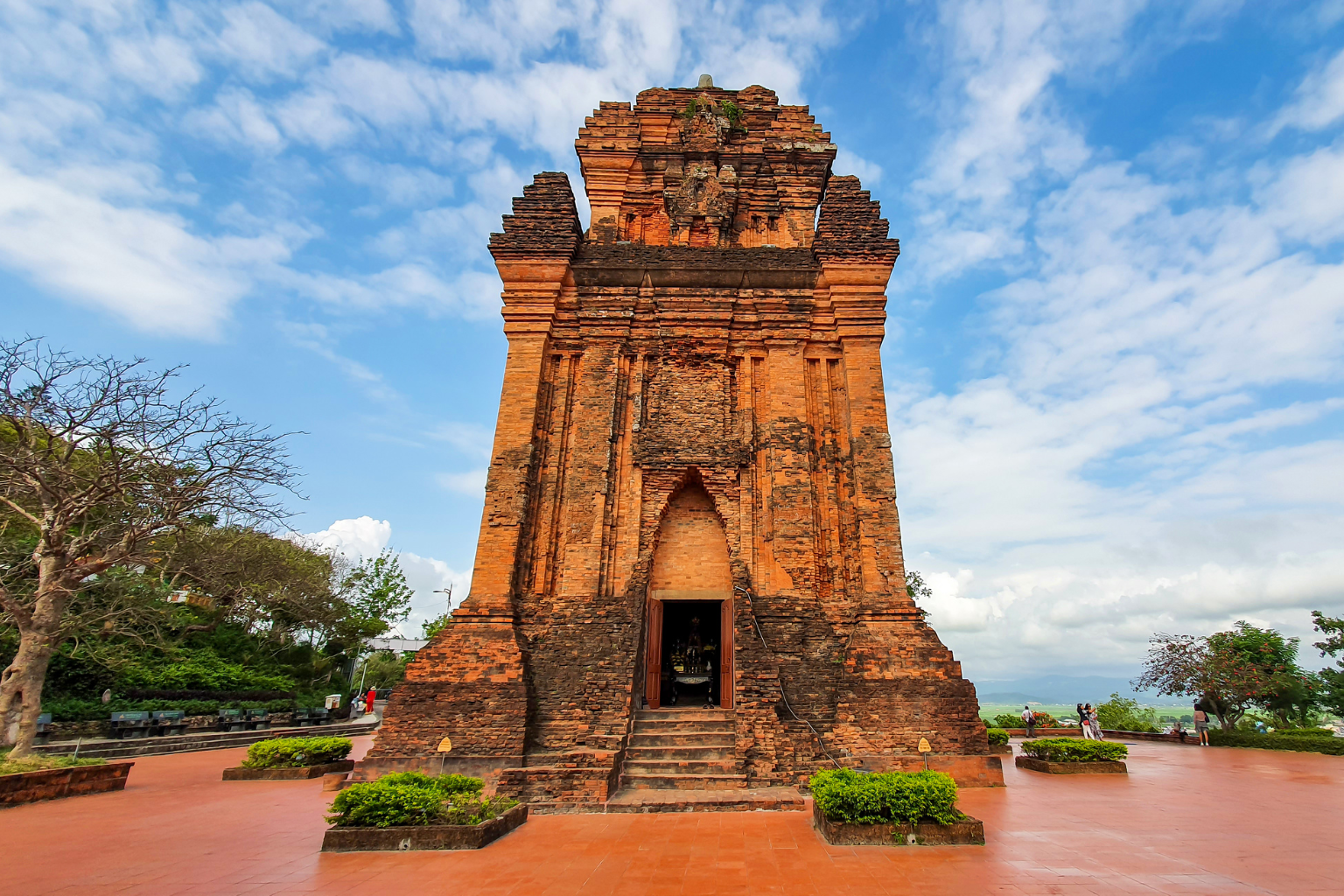
Nhan Tower is more than a viewpoint above Tuy Hoa. Standing on Nhan Mountain beside the Da Rang River, the 23.5-metre Cham tower is the only surviving Cham tower still largely intact in Phu Yen and has been recognised as a Special National Relic. Built between roughly the 10th and 13th centuries, it preserves distinctive Cham brick-building techniques, with tightly fitted fired bricks and a tiered tower form that narrows towards the top. What makes the site especially valuable is the connection between architecture, belief and landscape.
Read on to understand the history behind Nhan Tower, the details to look for when you visit, and what the site reveals about Cham culture in Phu Yen.
Nhan Tower: Phu Yen’s Best-Known Cham Landmark
Nhan Tower is the most visible surviving Cham monument in Tuy Hoa and one of the clearest places to understand how Cham religion, architecture, and landscape came together. The tower stands near the summit of Nhan Mountain, overlooking the Da Rang River and the modern city below.
When and Why Was Nhan Tower Built?
Vietnam’s national tourism database dates Nhan Tower to approximately the late 11th to early 12th century, although some official cultural sources use a broader period between the 10th and 13th centuries. The site was built by the Cham as a place of worship rather than as a defensive or residential structure.
Religious towers were an important part of Cham sacred architecture across central Vietnam. At Nhan Tower, that purpose is still reflected in the building’s orientation, vertical form, and later continuation as a place of local worship. The Ministry of Culture, Sports and Tourism notes that the site is also important for understanding the later interaction between Cham and Vietnamese beliefs, rather than representing only one historical period.
Architecture and Design of Nhan Tower
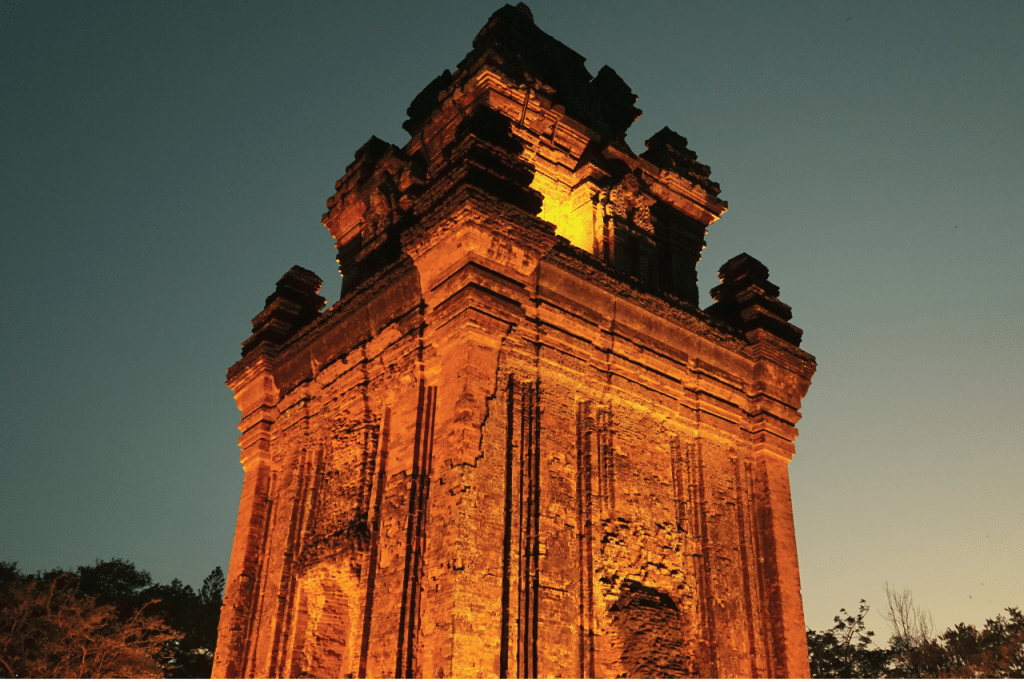
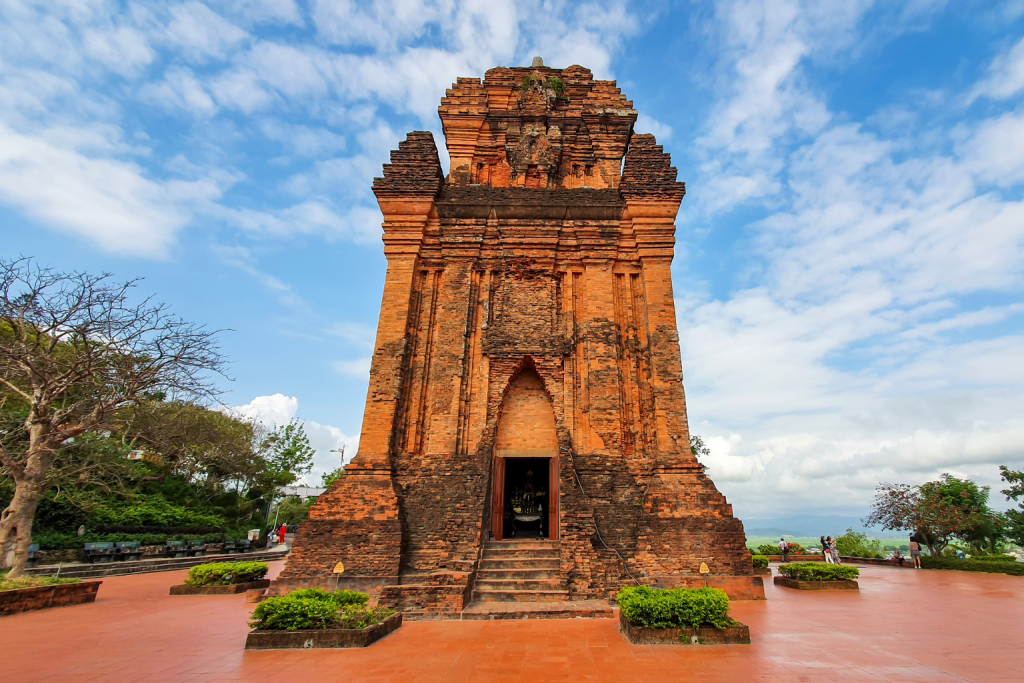
Nhan Tower rises to almost 23.5 metres, with a square base measuring about 10 metres on each side. Its four-tiered structure becomes progressively narrower towards the top, creating the tall, tapering form associated with Cham temple towers.
The structure was built largely from fired bricks fitted closely together, with joints that are difficult to see from the exterior. The main entrance faces east and is topped by a stepped arch, while false openings appear on the upper sections of the tower. At the top, layers of masonry lead towards a stone element shaped like a lotus bud.
Compared with more heavily decorated Cham monuments elsewhere in Vietnam, Nhan Tower has relatively restrained exterior ornamentation. This makes the brickwork, proportions, and overall tower form particularly important details to look for during a visit.
What Nhan Tower Tells Us About Cham Culture in Phu Yen
Nhan Tower is significant because it is not simply an old structure that happens to have survived. The Ministry of Culture, Sports and Tourism identifies it as the only Cham tower remaining relatively intact in the Phu Yen area and highlights its value for studying Champa architecture, art, religion and cultural interaction. It was recognised as a Special National Relic in 2018.
Its location also helps explain the wider Cham presence in the region. From Nhan Mountain, the tower overlooks the river plain and the area that later developed into Tuy Hoa. Seen together with other archaeological remains found across Phu Yen, it becomes part of a broader historical landscape rather than an isolated monument.
For visitors today, this is what makes Nhan Tower particularly valuable: you can still stand beside a surviving Cham religious structure while looking directly across the modern city that has grown around it.
The Historical Setting Around Nhan Tower
Nhan Mountain and the Location of the Tower
Nhan Tower stands on relatively level ground near the top of Nhan Mountain, on the northern side of the Da Rang River. Official tourism information places the site close to the river and identifies the tower as a Cham religious monument built here around the late 11th to early 12th century.
Its elevated position gives the site a strong relationship with the surrounding landscape. From the mountain, visitors can look across the river, the low-lying plain, and modern Tuy Hoa below. This setting helps explain why the tower feels different from a monument enclosed within a museum or archaeological park: the historic structure is still visually connected to the landscape around it.
For visitors today, it is worth taking time to look beyond the tower itself. The view over the Da Rang River and Tuy Hoa provides useful context for understanding how this historic Cham site now sits within a much larger modern city.
From Cham Heritage to Modern Tuy Hoa
Nhan Tower has survived through major changes in the region, including periods of conflict and later restoration. Official records note that the structure suffered damage during the First Indochina War and underwent repairs in the 1960s. It was recognised as a national architectural and artistic relic in 1988 and later received Special National Relic status.
Its role has also continued to evolve. The site is not treated only as an archaeological remnant; local religious and cultural practices have developed around it over time, creating layers of Cham and Vietnamese belief. Current national conservation planning specifically identifies Nhan Tower as evidence of the long development of Tuy Hoa and the interaction between Vietnamese and Cham culture and belief.
Today, the tower remains one of Tuy Hoa’s most recognisable heritage landmarks. Current conservation plans aim to protect the monument and its surrounding landscape while strengthening its role as a cultural and visitor site connected to the wider system of Cham towers in central Vietnam.
Planning Your Visit to Nhan Tower
Best Time to Visit Nhan Tower
Early morning or late afternoon is generally more comfortable, particularly if you want time to walk around the exposed hilltop area. Late afternoon also gives you a chance to see Tuy Hoa, the surrounding plain, and the Da Rang River in softer light.
Allow roughly 30-60 minutes for a relaxed visit, depending on how much time you want to spend looking at the architecture and surrounding views. Current operating hours can change, so check the latest local information before visiting rather than relying on older published schedules.
How to Get to Nhan Tower
Nhan Tower is located on Nhan Mountain in Tuy Hoa, on the northern side of the Da Rang River. Because it is within the city, it can easily be combined with Tuy Hoa Beach, Nghinh Phong Tower, or a meal in central Tuy Hoa.
From TUI BLUE Tuy Hoa, the hotel’s current destination information gives an indicative driving time of around 5 minutes to Nhan Tower. A taxi or private car is the simplest option for most visitors, particularly during hotter parts of the day.
Stay in Tuy Hoa and Explore Its Cham Heritage
TUI BLUE Tuy Hoa offers a convenient base for exploring Nhan Tower and other cultural sights around the city. The hotel’s current destination information places Nhan Tower at around a 5-minute drive, making it easy to visit in the morning or late afternoon without turning the experience into a full-day excursion.
After exploring the tower and Nhan Mountain, you can return to the hotel for a slower part of the day, whether that means time at the Four Season Pool, a wellness session at Lumiere Wellness & Healing Club, or dinner at one of the hotel’s restaurants. This makes it easy to combine Tuy Hoa’s history and heritage with a more relaxed stay.
Explore TUI BLUE Tuy Hoa and plan a stay that brings together Cham heritage, city sightseeing, and time to unwind.